

What Is a HIPAA Covered Entity? Definition & Examples
Many organizations assume that if they handle healthcare data, HIPAA automatically applies to them. Others believe that being located outside the United States means they have no HIPAA obligations at all. In reality, both assumptions can be misleading.
From hospitals, insurance providers to healthcare startups, medical billing companies, or IT service providers in India supporting U.S. healthcare clients, understanding what is a HIPAA covered entity is the first step toward determining your compliance responsibilities. Misidentifying your role can lead to contractual issues, compliance gaps, and unnecessary legal or operational risks.
The distinction becomes even more important as healthcare organizations rely on global technology partners to process, store, and manage Protected Health Information (PHI). Knowing the HIPAA covered entity definition, identifying the different covered entities under HIPAA, and understanding the difference between a HIPAA covered entity vs business associate are essential for building a strong privacy and security program.
In this guide, we'll explain who is a covered entity under HIPAA, explore common HIPAA covered entity examples, and break down the key HIPAA covered entity requirements that organizations should understand. Whether you're based in the United States or India, this article will provide practical insights to help you navigate HIPAA with greater confidence.
What Is a HIPAA Covered Entity?
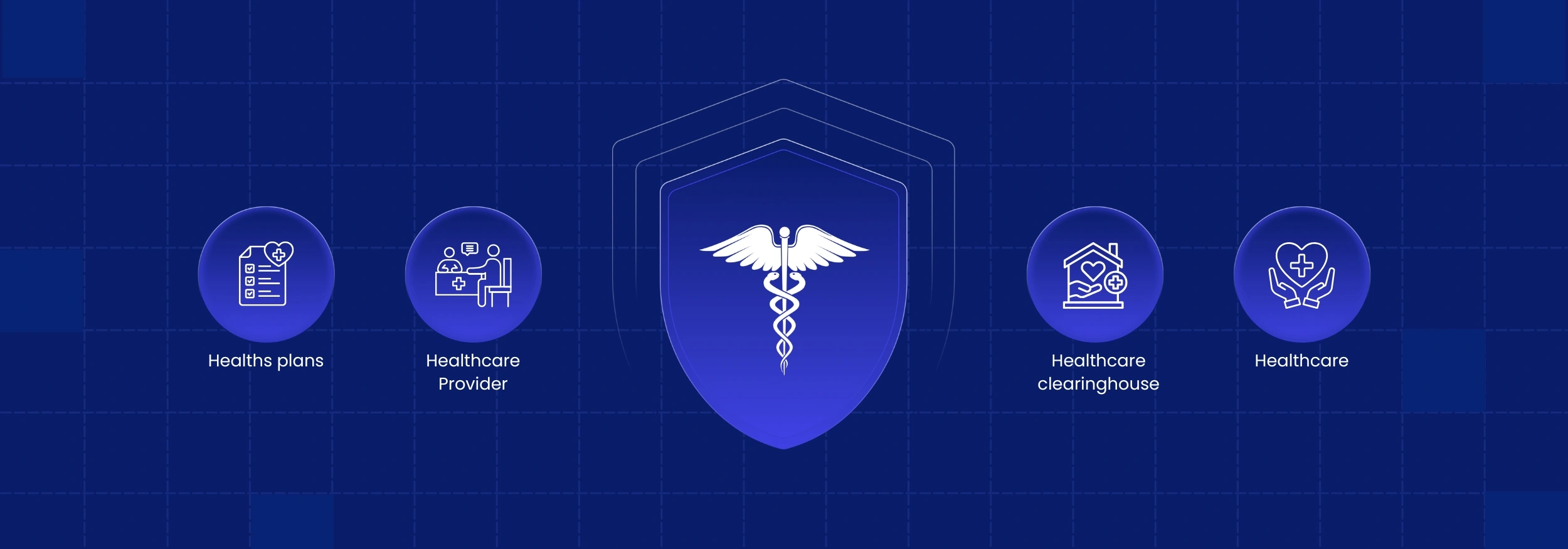
Before discussing compliance obligations, it's important to understand the HIPAA covered entity definition. A HIPAA Covered Entity is an organization that is directly regulated under the Health Insurance Portability and Accountability Act (HIPAA) because it creates, receives, maintains, or transmits Protected Health Information (PHI) as part of specific healthcare activities defined by the law. According to the U.S. Department of Health and Human Services (HHS), there are three main categories of covered entities under HIPAA:
- Healthcare providers
- Health plans
- Healthcare clearinghouses
These organizations are responsible for complying with the HIPAA Privacy Rule, Security Rule, and Breach Notification Rule to ensure that patients' health information remains confidential, accurate, and secure. It's also important to understand what Protected Health Information (PHI) includes. PHI refers to individually identifiable health information, such as medical records, laboratory results, insurance details, treatment history, or billing information, whether stored electronically, on paper, or communicated verbally.
Discover how INTERCERT evaluates HIPAA Compliance requirements across your organization's security and privacy controls.
Who Is a Covered Entity Under HIPAA?
A common misconception is that every organization in the healthcare industry automatically falls under HIPAA. However, that's not the case. Whether an organization qualifies as a covered entity depends on its role within the healthcare ecosystem and whether it performs specific functions defined under HIPAA. Understanding who is a covered entity under HIPAA is essential for determining an organization's compliance obligations. HIPAA recognizes three main categories of covered entities under HIPAA:
Healthcare Providers
Healthcare providers make up the largest category of HIPAA covered entities. This includes hospitals, physicians, dental clinics, pharmacies, nursing homes, psychologists, physiotherapists, laboratories, chiropractors, and other healthcare professionals. However, not every healthcare provider automatically becomes a covered entity. A provider is considered a HIPAA Covered Entity only if it electronically transmits health information in connection with standard HIPAA transactions, such as submitting insurance claims, verifying patient eligibility, or processing payments.
For example, a hospital in the United States that electronically submits insurance claims is a covered entity under HIPAA. In contrast, an IT or medical transcription company in India working with that hospital is generally not a covered entity but may be classified as a business associate if it accesses or processes Protected Health Information (PHI) on the hospital's behalf.
Health Plans
Health plans are organizations that finance or reimburse the cost of healthcare services. Because they collect, store, and process large amounts of patient information, they are required to comply with HIPAA's privacy and security requirements. Common HIPAA covered entity examples in this category include health insurance companies, Health Maintenance Organizations (HMOs), employer-sponsored health plans, Medicare, Medicaid, and other government healthcare programs. These organizations play a critical role in safeguarding PHI while managing claims, enrollments, and healthcare benefits.
Healthcare Clearinghouses
Healthcare clearinghouses are specialized organizations that facilitate the exchange of healthcare information between providers and insurers. They receive health information in one format, convert it into standardized electronic formats required for HIPAA transactions, and transmit it to the appropriate parties. For instance, a healthcare clearinghouse may receive billing information from a hospital, standardize the data, and forward it to an insurance company for claims processing. Although patients rarely interact with clearinghouses directly, they routinely handle sensitive PHI, making them one of the primary covered entities under HIPAA and subject to the same privacy and security obligations as other covered entities.
HIPAA Covered Entity Examples
Understanding real-world scenarios makes it easier to identify whether an organization qualifies as a HIPAA Covered Entity. Some common HIPAA covered entity examples include:
- A hospital submitting electronic insurance claims.
- A dental clinic sharing patient billing information electronically.
- A pharmacy processing electronic prescriptions.
- A private health insurance provider managing member health records.
- Medicare or Medicaid administrators.
- A healthcare clearinghouse processing insurance claims between providers and insurers.
On the other hand, not every organization handling health-related information is automatically a covered entity. For instance, a software company in India that develops healthcare applications for U.S. hospitals generally does not qualify as a HIPAA Covered Entity. However, if the company accesses or processes Protected Health Information on behalf of the hospital, it may instead be classified as a business associate and become subject to specific HIPAA obligations through a Business Associate Agreement (BAA). This distinction is one of the most commonly misunderstood aspects of HIPAA compliance..png)
What Are the HIPAA Covered Entity Requirements?
Once an organization qualifies as a HIPAA Covered Entity, it must comply with several regulatory requirements designed to protect Protected Health Information (PHI). These HIPAA covered entity requirements are primarily defined under three key HIPAA Rules: the Privacy Rule, the Security Rule, and the Breach Notification Rule.
HIPAA Privacy Rule
The HIPAA Privacy Rule establishes standards for how covered entities collect, use, disclose, and protect PHI. It also grants patients specific rights over their health information, including the right to access, request corrections, and receive an accounting of certain disclosures. Organizations should implement clear privacy policies and ensure that PHI is only accessed by authorized individuals for legitimate healthcare or business purposes.
HIPAA Security Rule
While the Privacy Rule applies to all forms of PHI, the Security Rule specifically focuses on electronic Protected Health Information (ePHI). Covered entities are expected to implement administrative, physical, and technical safeguards to protect sensitive data from unauthorized access, loss, or cyber threats. Examples include access controls, encryption, employee training, secure authentication methods, regular risk assessments, and system monitoring. These safeguards reduce the likelihood of data breaches while strengthening overall cybersecurity.
HIPAA Breach Notification Rule
Despite strong security measures, data breaches can still occur. The Breach Notification Rule outlines the steps organizations must take when unsecured PHI is compromised. Depending on the nature and scale of the incident, covered entities may need to notify affected individuals, the U.S. Department of Health and Human Services (HHS), and, in certain situations, the media. Timely incident response and accurate documentation are essential for meeting these regulatory obligations.
Therefore, these three rules form the foundation of the HIPAA covered entity requirements and demonstrate that HIPAA compliance is an ongoing process rather than a one-time activity.
Common HIPAA Compliance Challenges
Even organizations with mature compliance programs can encounter challenges when protecting patient information. As healthcare technologies evolve and cyber threats become more sophisticated, maintaining compliance requires continuous attention. Some of the most common challenges include:
Managing Third-Party Vendors
Healthcare organizations frequently rely on cloud providers, IT vendors, billing companies, and other service providers that handle PHI. Ensuring these vendors meet HIPAA requirements and maintain appropriate contractual agreements is essential for reducing compliance risks.
Cybersecurity Threats
Ransomware attacks, phishing campaigns, and unauthorized access attempts continue to target healthcare organizations worldwide. A single security incident can disrupt operations, expose sensitive patient information, and result in significant financial and reputational consequences.
Employee Awareness
Human error remains one of the leading causes of HIPAA violations. Employees should understand privacy policies, recognize security risks, and follow established procedures for handling PHI appropriately.
Maintaining Accurate Documentation
Organizations should keep policies, procedures, training records, incident logs, and security documentation current. Well-maintained records demonstrate compliance efforts and provide valuable evidence during regulatory reviews or audits.
Choose INTERCERT for an independent HIPAA Compliance assessment aligned with regulatory and contractual requirements.
Best Practices for HIPAA Covered Entities
Building an effective HIPAA compliance program requires more than meeting minimum regulatory requirements. The following best practices can strengthen data protection and improve long-term compliance.
Establish Comprehensive Privacy and Security Policies
Documented policies provide employees with clear guidance on handling PHI, reporting incidents, controlling access, and maintaining confidentiality. Policies should be reviewed regularly to reflect changes in regulations, technology, and organizational processes.
Improve Technical and Administrative Safeguards
Adopt robust security measures such as encryption, multi-factor authentication, role-based access controls, secure backups, and continuous system monitoring. These safeguards significantly reduce cybersecurity risks and improve data protection.
Provide Ongoing Employee Training
HIPAA compliance depends heavily on employee awareness. Regular training sessions help staff understand evolving threats, organizational policies, and their responsibilities when handling sensitive patient information.
Monitor Third-Party Relationships
Organizations should regularly review Business Associate Agreements and evaluate vendor security practices to ensure external partners continue meeting HIPAA expectations.
Maintain Continuous Compliance
HIPAA compliance should be integrated into day-to-day operations rather than treated as an annual exercise. Regular policy reviews, security updates, and risk evaluations contribute to a stronger compliance program over time.
Moving Toward Stronger Healthcare Privacy and Compliance
Understanding the HIPAA covered entity definition is the first step toward protecting patient information and maintaining regulatory compliance. Whether you're determining who is a covered entity under HIPAA or comparing a HIPAA covered entity vs business associate, recognizing your organization's role is essential for meeting legal obligations and safeguarding Protected Health Information.
For organizations in India that work with U.S. healthcare providers, insurers, or healthcare technology companies, understanding the HIPAA covered entity requirements and related responsibilities is increasingly important. Establishing strong privacy practices, maintaining effective security controls, and fostering a culture of compliance not only reduces regulatory risks but also strengthens trust with clients and patients.
Organizations seeking independent validation of their information security and healthcare compliance practices can also explore internationally recognized certification and assessment services offered by INTERCERT, reinforcing their commitment to protecting sensitive healthcare information and meeting global compliance expectations.


 +1 (281) 720-3261
 info@intercert.com
 2001 Timberloch Place - Suite 500, The Woodlands, Texas 77380, United States